
You represented EDUC — the European university alliance led by the University of Potsdam — at EUSAF 2025. What is that exactly?
EUSAF is short for European University Students Ambassadors’ Forum. It’s a platform that brings together students from across Europe to exchange opinions, ideas, and experiences about the future of European higher education. Student representatives are nominated by their university alliances, and the forum meets three times a year — twice online and once in person. The events are largely organized by students themselves, in collaboration with the Erasmus Student Network. One key outcome — aside from the direct exchanges and networking — is the development of policy papers that summarize discussions and recommendations. ESN then forwards these to relevant stakeholders in Brussels to ensure that student perspectives are heard at the European level.
How did you become involved in EUSAF?
I only came to Potsdam in the 2024/25 winter semester to start my master’s in international communication and management. When the EDUC student vice president invited applications for student ambassadors, I didn’t hesitate. It was a new initiative, and it seemed like a great opportunity to get involved and build connections.
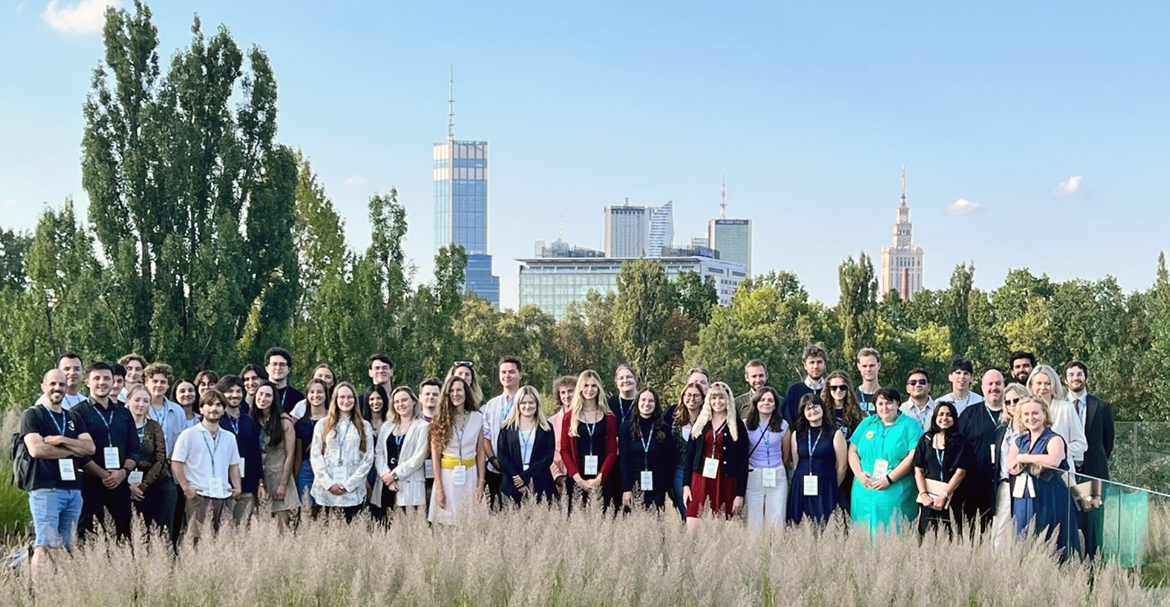
What was on the agenda during the three days in Warsaw?
The first day began with a keynote on higher education policy and broader educational issues, focusing in particular on developments in Poland and across Europe. We then took part in a workshop on event management and organization, which was especially helpful because students are responsible for organizing the EUSAF conference themselves. The day ended with time for informal exchange and networking, including a pub quiz in the city.
On the second day, participants presented their alliances through poster sessions. With around 50 contributions, this took some time, but it was impressive to see the wide range of perspectives and offered a chance to learn from one another. Later, ESN led a workshop on stakeholder mapping and strategies for improving alliance communication.
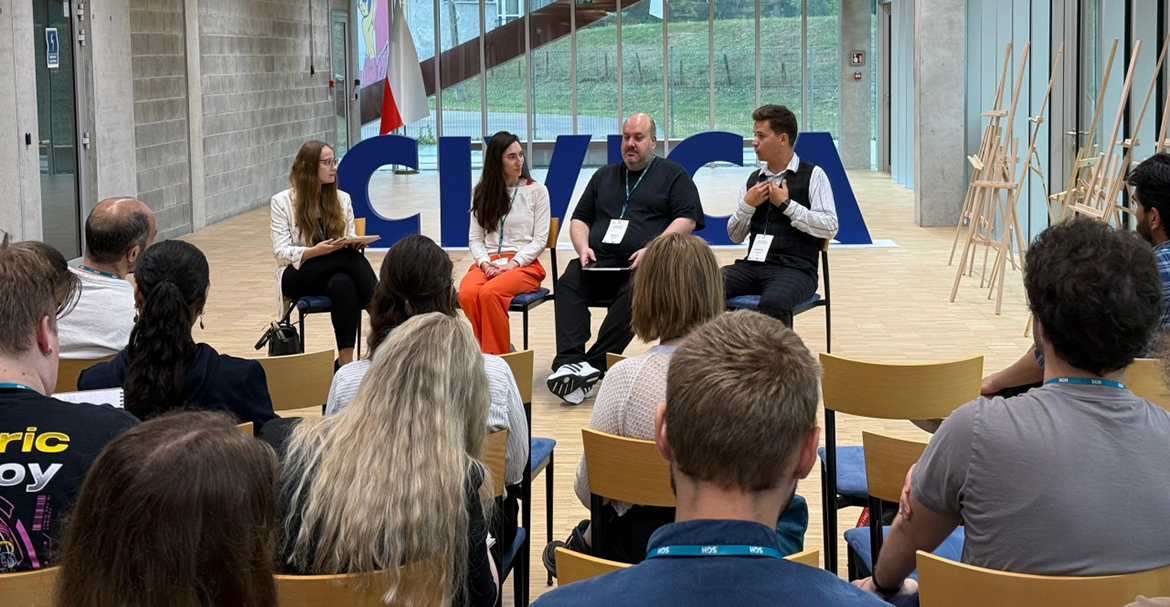
The third day focused on summarizing our discussions. Through a panel and small-group work, we consolidated the key findings that will be forwarded to Brussels to ensure that student concerns are represented at the European level.
How is EDUC different from other alliances?
EDUC focuses strongly on networked learning and collaborative — often student-led — research. Some alliances have more specialized technical or environmental profiles. What makes EDUC unique is its digital infrastructure, which enables students from eight partner universities to come together online for joint courses and projects. This digital campus is open not only to students but also to instructors, researchers, and doctoral candidates.
What did you take away from EUSAF in terms of European networking?
Events like this are incredibly important because they bring together students who are genuinely passionate about education. They create fertile ground for new ideas and initiatives. There’s often a stereotype that students lack initiative or commitment, but the many brilliant minds I met there completely disproved that. The energy and maturity with which they pursue their projects are impressive. It’s important that Europe listens carefully to these voices.
And what did you take away specifically for EDUC?
One key insight was that different universities require different approaches, especially when it comes to social media. Some institutions communicate very effectively through social networks, while others rely on different strategies. It’s important to respect these differences. At the same time, we need to be willing to experiment, evaluate what works, and adapt our approaches accordingly.
On a personal level?
I gained a much deeper understanding of the diversity of alliances and their thematic priorities. It also became clear that not all alliances are at the same stage of development — EDUC, for example, is already quite advanced in building its structures.
What impressed me most, though, were the many young people with tremendous potential to drive change and innovation. The connections formed at such events endure, regardless of how the future unfolds. These gatherings are often a starting point, laying the foundation for future projects and collaborations.
What does your day-to-day work as an EDUC student representative involve?
Our main role is to raise awareness of the alliance among students at the University of Potsdam. I’m convinced that EDUC offers something for everyone, but unfortunately not enough students know about it yet. Changing that takes time and creative ideas. We also try to understand students’ needs — for example, through surveys — so that EDUC can continue to evolve. Twice a year, we travel to a partner university to attend meetings of the alliance’s Steering Committee and exchange ideas with other student representatives.
Since my co-representative will soon complete his studies, anyone interested in getting involved is welcome to apply.
What does EDUC mean to you personally?
I really value the exchange with students who have different perspectives. In society, we tend to stay within our own “bubbles,” surrounded by people who think similarly. EDUC offers a refreshing alternative because you constantly encounter new viewpoints. To me, this experience reflects the core of the European Union and the European idea itself: diversity and dialogue. In that sense, EDUC and the EU embody similar principles by creating spaces for encounters among different cultures and opinions, fostering meaningful exchange.
Why would you encourage students to take part in EDUC opportunities?
For anyone interested in education, eager to make a difference, and open to learning from other ways of thinking, EDUC is an excellent opportunity.
Further information about EDUC: https://www.uni-potsdam.de/en/educ/index