News from the University of Potsdam

Subjects
Selected Subject:
Schädel einer toten Kuh auf einem Feld.

Global network initiative investigating drylands

University of Potsdam researchers have contributed to a global study that assesses ecosystem services in drylands. The international team led by …
Prof. Dr. Dieter Neher (left) and Prof. Dr. Bernd Müller-Röber (right)

The Best in the World – Scientists from the University of Potsdam Again Among Most Cited Researchers

Two scientists from the University of Potsdam are among the absolute top group of the most cited researchers in their field worldwide. This year’s …
Prof. Michael Lenhard in the Botanical Garden

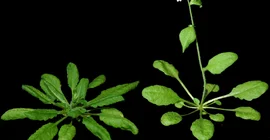
To the left or to the right? – Geneticist Prof. Michael Lenhard investigates how plants can tell left from right

In the course of evolution, plants have developed various strategies to prevent self-pollination. The marsh butterfly lily, which originates from …
Data collection with a field spectrometer

Understanding Tipping Points in Savannas – Ecologist Prof. Anja Linstädter Researches How Humans Affect the Development of African Savannas and Grassland


Since September 2020, Anja Linstädter has been Professor for Biodiversity Research and Systematic Botany at the University of Potsdam and Director of …
By helicopter through the Canadian Arctic.

When it gets warmer – Species extinction in the Arctic - 9,000 years ago and today

The tundra is turning green. As climate change proceeds, bushes and shrubs are advancing into the barren Arctic regions. It is the same everywhere, …
Prof. Dr. Carsten Beta

Cell Physics in the Land of the Rising Sun – Japanese Research Professorship for Carsten Beta

End of September, Prof. Carsten Beta, biophysicist at the Institute of Physics and Astronomy, will leave for a research stay of several weeks at the …
Prof. Michael Hofreiter

AlterEco – Tracing the Ecological Footprint of the Neanderthal

Humans live large. The rainforest, which is so important for the world, is dwindling, as are the polar caps and the permafrost. The goal, agreed upon …
Researchers target the skin of humpback whales and Magellanic penguins.

Stowaways – What can microorganisms on the skin of whales or penguins reveal about environmental changes?

Humpback whales are among the most impressive animals on earth, with an average length of 13 meters and weighing up to 30 tons. Evolutionary biologist …
Bat with radio transmitter

Networking for food: Bats communicate and work together for more efficient foraging

Social hunting strategies are already well documented in many animal species when prey is distributed in an unpredictable way across the landscape. In …
DNA-Sequenzierung des Grauwolfs

Dog ancestry can be traced to two separate wolf populations

An international group of geneticists and archaeologists with participation of the University of Potsdam have found that the ancestry of dogs can be …